
Sugestões
Partilhar
Informação da revista
Vol. 32. Núm. 2.
Páginas 169-171 (Fevereiro 2013)
Vol. 32. Núm. 2.
Páginas 169-171 (Fevereiro 2013)
Image in cardiology
Open Access
Usefulness of cardiac computed tomography in planning and evaluating alcohol septal ablation
Utilidade da tomografia computorizada cardíaca no planeamento e avaliação do resultado da ablação septal por álcool
Visitas
8619
Ana Faustinoa,
Autor para correspondência
anacatarina.faustino@gmail.com

Corresponding author.
, Nuno Ferreirab, Nuno Bettencourtb, Mónica Carvalhob, Daniel Leiteb, Vasco Gamab
a Serviço de Cardiologia, Centro Hospitalar e Universitário de Coimbra, Coimbra, Portugal
b Serviço de Cardiologia, Centro Hospitalar de Vila Nova de Gaia/Espinho, Gaia, Portugal
Este item recebeu

Under a Creative Commons license
Informação do artigo
Texto Completo
Bibliografia
Baixar PDF
Estatísticas
Figuras (4)
Mostrar maisMostrar menos
Texto Completo

Alcohol septal ablation (ASA) is an option in the treatment of obstructive hypertrophic cardiomyopathy refractory to medical therapy.1–3 Cardiac computed tomography (CT) is useful in the selection of patients, as it can simultaneously assess the coronary anatomy and its spatial relations with the myocardium, which is essential in determining the feasibility of ASA and selecting the appropriate septal artery. It can also evaluate the success of the procedure, by assessing the obstruction decreasing and the extent of fibrotic tissue (without additional contrast if performed immediately following ASA), at low dose radiation exposure.1–3

The authors present images illustrating the value of CT, comparing it with the other imaging modalities normally used in this context.

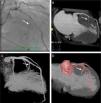
Figure 1 compares images of left ventricular outflow tract (LVOT) obstruction by echocardiography (A) and CT (B), the latter also identifying a septal artery (arrow).
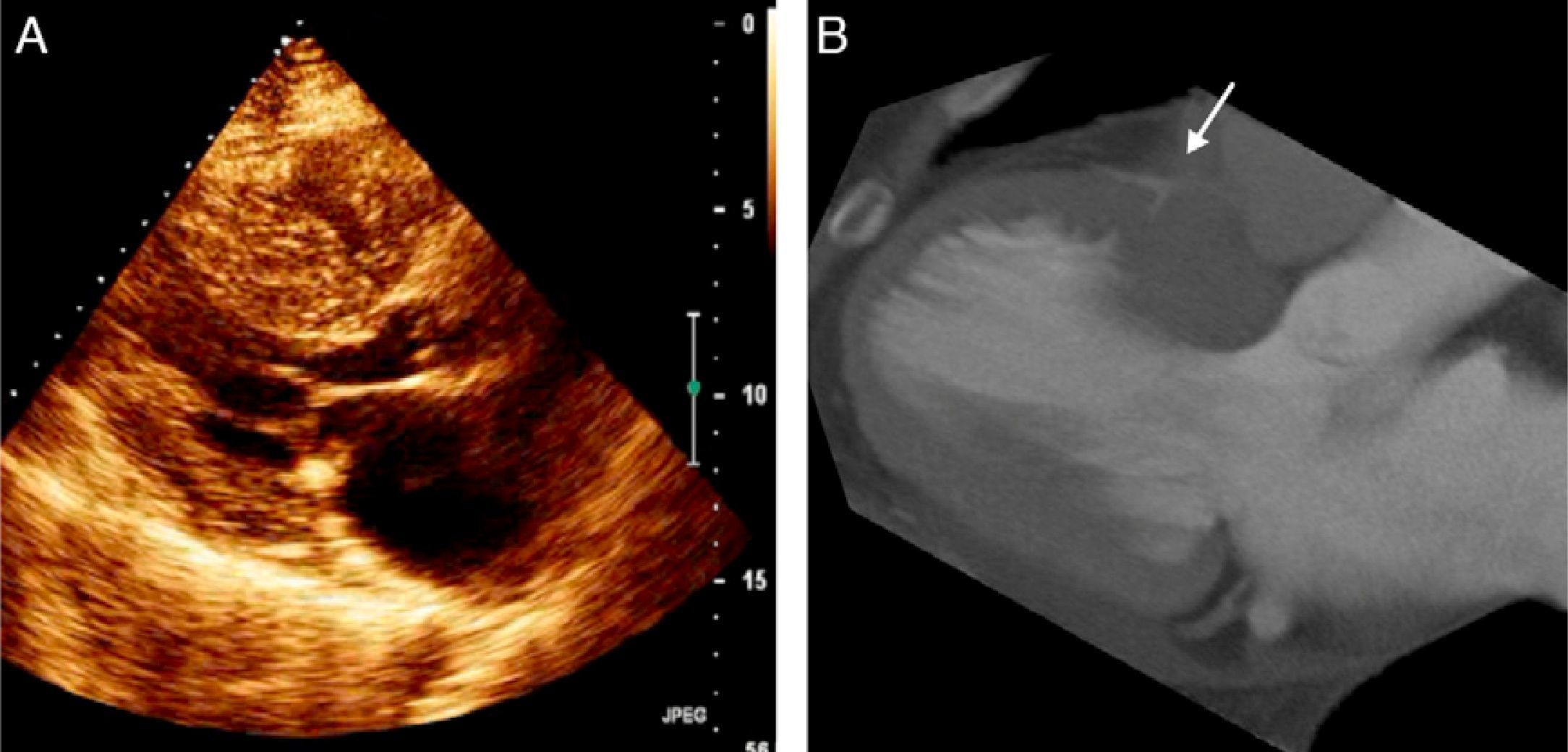
Figure 1.

(A): Two-dimensional transthoracic echocardiogram in parasternal long-axis view in diastole; (B): the same view by multiplanar reconstruction (MPR) cardiac CT, 12 mm thickness, in diastole.

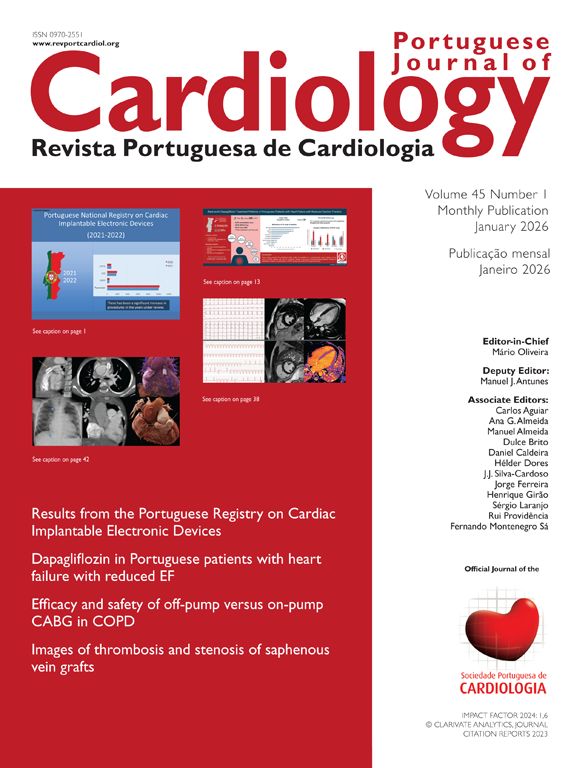
Figure 2 shows the anatomy of the septal arteries by invasive coronary angiography (A) and CT (B–D), showing the relationship between the septal arteries (arrow) and the ventricular chamber (C) and the hypertrophied myocardium (B and D).
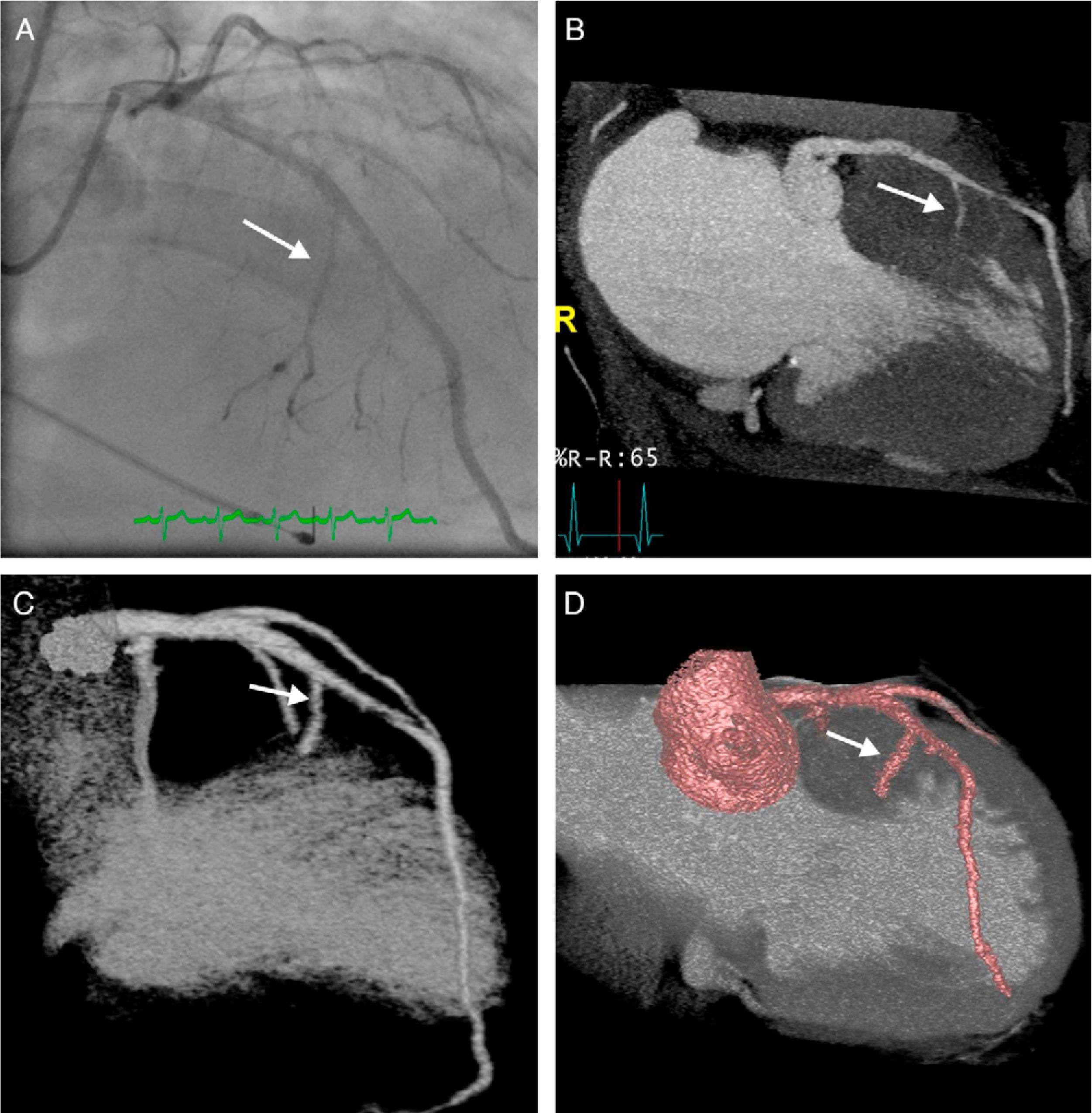
Figure 2.

(A): Invasive coronary angiography in right anterior oblique view; (B): maximum intensity projection (MIP) CT coronary angiography, 12 mm thickness; (C) and (D): CT coronary angiography, three-dimensional reconstruction.

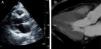
Images of the LVOT (Figure 3) by echocardiography (A) and CT (B) following ASA confirm the success of the procedure.
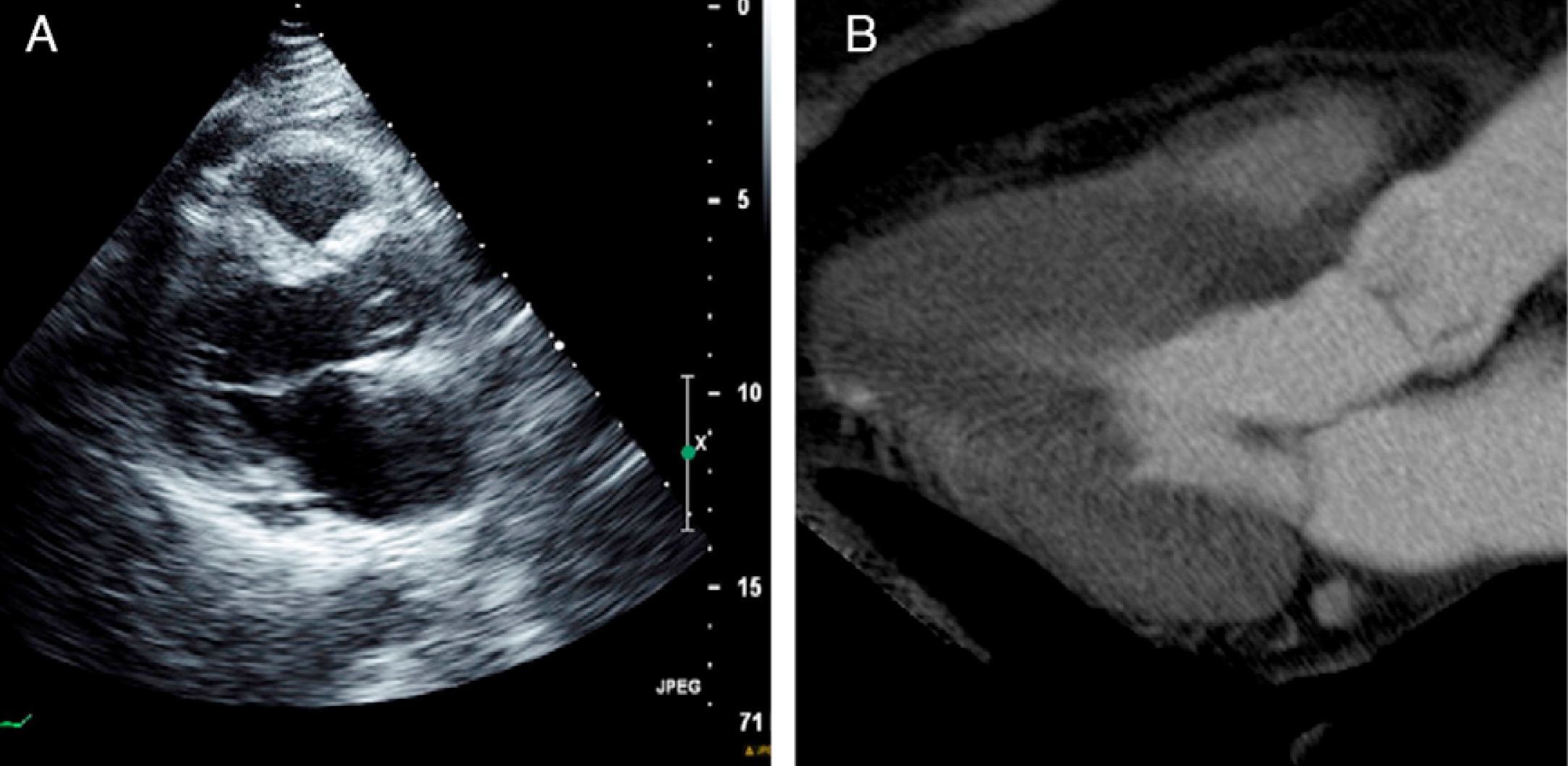
Figure 3.

(A): Two-dimensional transthoracic echocardiogram in parasternal long-axis view in systole; (B): cardiac CT (MPR), 12 mm thickness, 3-chamber view, in systole (25% of the cardiac cycle).

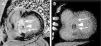
Figure 4 compares late enhancement images by magnetic resonance imaging (A) and CT (B) following ASA, showing areas of myocardial fibrosis (arrows) and microvascular lesion induced by alcohol ablation (triangle).
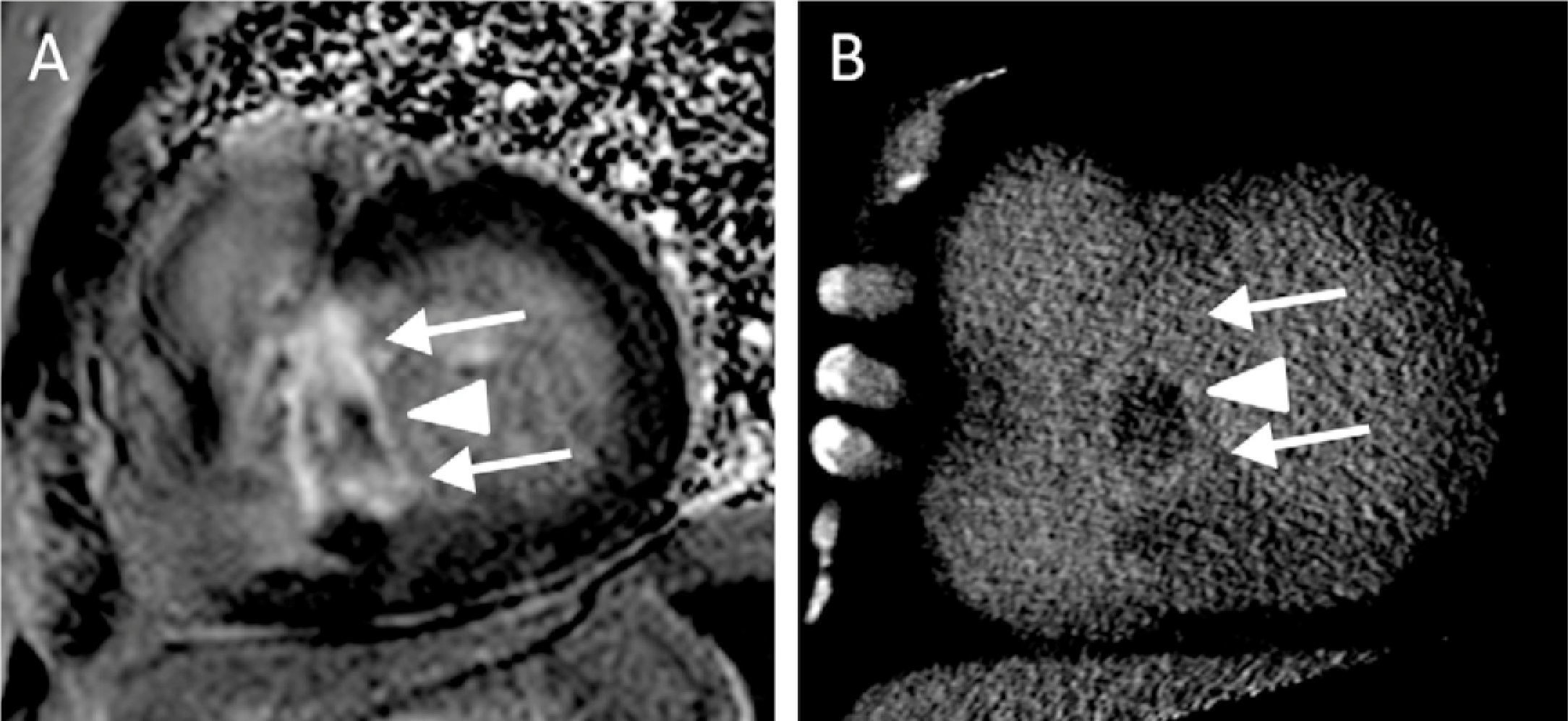
Figure 4.

(A): Cardiac magnetic resonance (phase-sensitive inversion recovery), late enhancement study in short-axis view; (B): cardiac CT (MPR), 12 mm thickness, in the same view.

Cardiac CT is a non-invasive technique that can be used to plan ASA, assess the outcome and predict its long-term success.

Ethical disclosuresProtection of human and animal subjects

The authors declare that no experiments were performed on humans or animals for this study.

Confidentiality of data

The authors declare that they have followed the protocols of their work center on the publication of patient data and that all the patients included in the study received sufficient information and gave their written informed consent to participate in the study.

Right to privacy and informed consent

The authors declare that no patient data appear in this article.

Conflicts of interest

The authors have no conflicts of interest to declare.

References
[1]
J.F. Deux, J. Potet, P. Lim, et al.
Is multidetector computed tomography a suitable alternative to MR imaging for the assessment of myocardial necrosis after alcohol septal ablation.
[2]
R. Mitsutake, S. Miura, H. Sako, et al.
Usefulness of multi-detector row computed tomography for the management of percutaneous transluminal septal myocardial ablation in patient with hypertrophic obstructive cardiomyopathy.
Int J Cardiol, 129 (2008), pp. e61-e63
[3]
S. Okayama, S. Uemura, T. Soeda, et al.
Role of cardiac computed tomography in planning and evaluating percutaneous transluminal septal myocardial ablation for hypertrophic obstructive cardiomyopathy.
J Cardiovasc Comput Tomogr, 4 (2010), pp. 62-65

Please cite this article as: Faustino, A; Utilidade da tomografia computorizada cardíaca no planeamento e avaliação do resultado da ablação septal por álcool. Rev Port Cardiol 2013. http://dx.doi.org/10.1016/j.repc.2012.07.009


Copyright © 2012. Sociedade Portuguesa de Cardiologia
Baixar PDF
Idiomas
Revista Portuguesa de Cardiologia
Opções de artigo
Ferramentas
en pt

Are you a health professional able to prescribe or dispense drugs?

Você é um profissional de saúde habilitado a prescrever ou dispensar medicamentos

Ao assinalar que é «Profissional de Saúde», declara conhecer e aceitar que a responsável pelo tratamento dos dados pessoais dos utilizadores da página de internet da Revista Portuguesa de Cardiologia (RPC), é esta entidade, com sede no Campo Grande, n.º 28, 13.º, 1700-093 Lisboa, com os telefones 217 970 685 e 217 817 630, fax 217 931 095 e com o endereço de correio eletrónico revista@spc.pt. Declaro para todos os fins, que assumo inteira responsabilidade pela veracidade e exatidão da afirmação aqui fornecida.
