Non-vitamin K oral anticoagulants (NOACs) have become the standard of care for the managing non-valvular atrial fibrillation.1 In Portugal, their use has been widespread since reimbursement was approved in 2014, despite the higher costs. A new option emerged with the introduction of generic versions of NOACs in September 2023, beginning with apixaban. Generic versions of dabigatran and rivaroxaban were introduced in January and April 2024, respectively.
Currently, there is limited data on the extent to which the population adheres to generic versions of NOACs. Generic drugs have been successfully introduced into the Portuguese market for other indications, which contributes to an overall perception of similar efficacy and safety. As far as we know, there are no publicly available data comparing clinical outcomes with NOACs and generic drugs. If we assume clinical similarity, there are important financial aspects to discuss both for patients and the healthcare system.
By analyzing data from the public database on commercialized medications and related costs in Portugal, valuable conclusions can be drawn.2 We analyzed the sales of NOAC pills – both branded and generic – as well as their costs to patients (out-of-pocket) and the national healthcare system (copayment) between July 2023 and June 2024.
During that period, €142 million NOAC pills – branded and generic – were sold in Portugal corresponding to a total expense of €167.4 million. The total out-of-pocket expense was €51.9 million (31.0%) and the total copayment was €115.5 million (69.0%). Among all NOACs sold, apixaban accounted for 53.1%, rivaroxaban 23.5%, edoxaban 13.2% and dabigatran 10.2%.
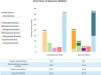
In total, generic NOACs represented 33.2% of all units sold. When dividing the observation period into quarters, we observed a strong trend toward the adoption of generic NOACs. In the first quarter, generics represented just 0.1%, increasing to 26.5% in the second quarter, 45.9% in the third, and 59.3% in the final quarter. Analyzing the market performance by active substance, we found that by the last quarter, 84.0% of apixaban pills sold were generics. Despite being introduced later, generic versions of dabigatran and rivaroxaban accounted for 68.3% and 33.9% of total sales in the last quarter, respectively (Figure 1).

In 2023, the national healthcare system allocated €1593.8 million to medications, with patients contributing €859.8 million.2 Anticoagulants ranked as the second-highest drug class in terms of total costs, with apixaban and rivaroxaban ranking as the second and third most expensive active substances, respectively. However, a decrease in the total expenses of these medications was observed. In the first quarter of the study period, expenses for NOACs amounted to €13.7 million for patients and €30.5 million for the public healthcare copayment system. By the last quarter, patient costs had decreased to €12.1 million and public healthcare copayment to €27.0 million, representing reductions of 11.7% and 11.5%, respectively. Another key aspect is that with the availability of generics, the standard copayment of 69% now applies to the lower-cost medication. As a result, branded medications have become more expensive for patients, which may lead to greater adherence to generic versions.
It is worth noting that while overall costs have decreased, the number of pills sold saw a slight increase from 35.2 million to 36.7 million. This may indicate that lower prices improve access to these medications for more patients and could lead to better adherence to therapy.
However, the generic version of apixaban has recently been withdrawn from the market. This may enable the pharmaceutical company producing the branded version to set prices more favorably, which could once again shift future trends.
To conclude, generics have been widely adopted by patients in Portugal leading to a significant decrease in costs for both patients and the public healthcare system. Economic factors and previous experience with generic drugs likely influenced patient choice.
Declaration of generative AI and AI-assisted technologies in the writing processDuring the preparation of this work, the author(s) used ChatGPT to assist in writing. After using this tool, the author(s) reviewed and edited the content as needed and take(s) full responsibility for the content of the publication.
FundingThis research was conducted without external financial support.
Conflicts of interestNo declaration of interests.