

Acute sialadenitis (AS) is an uncommon adverse reaction to intravenous iodine contrast. It causes painful, firm, bilateral gland inflammation that is usually confused with an allergic reaction. The mechanism is unknown, and a heterotrophic elimination of iodine contrast through the salivary glands was proposed as a probable cause. It usually resolves in a few days with no long-lasting side effects. There are less than 80 cases published in the available literature, but with the increasing use of iodine contrast, it is important to be familiar with this condition.
We present the case of a 73-year-old patient, with a previous history of hypertension and atrial fibrillation, who attended cardiology department for chest pain. A computed tomography coronary scan showed significant coronary artery disease in the anterior descending artery (ADA). Following the procedure, the patient developed a painful swelling of the submandibular glands, which was treated with intravenous corticosteroids.
Afterwards, the patient went to the allergology department to rule out angioedema secondary to iodine contrast, as she needed an angiogram. Cutaneous prick and submandibular glands with lomeprol, loversol, and loperamide were negative, so a diagnosis of AS was considered.
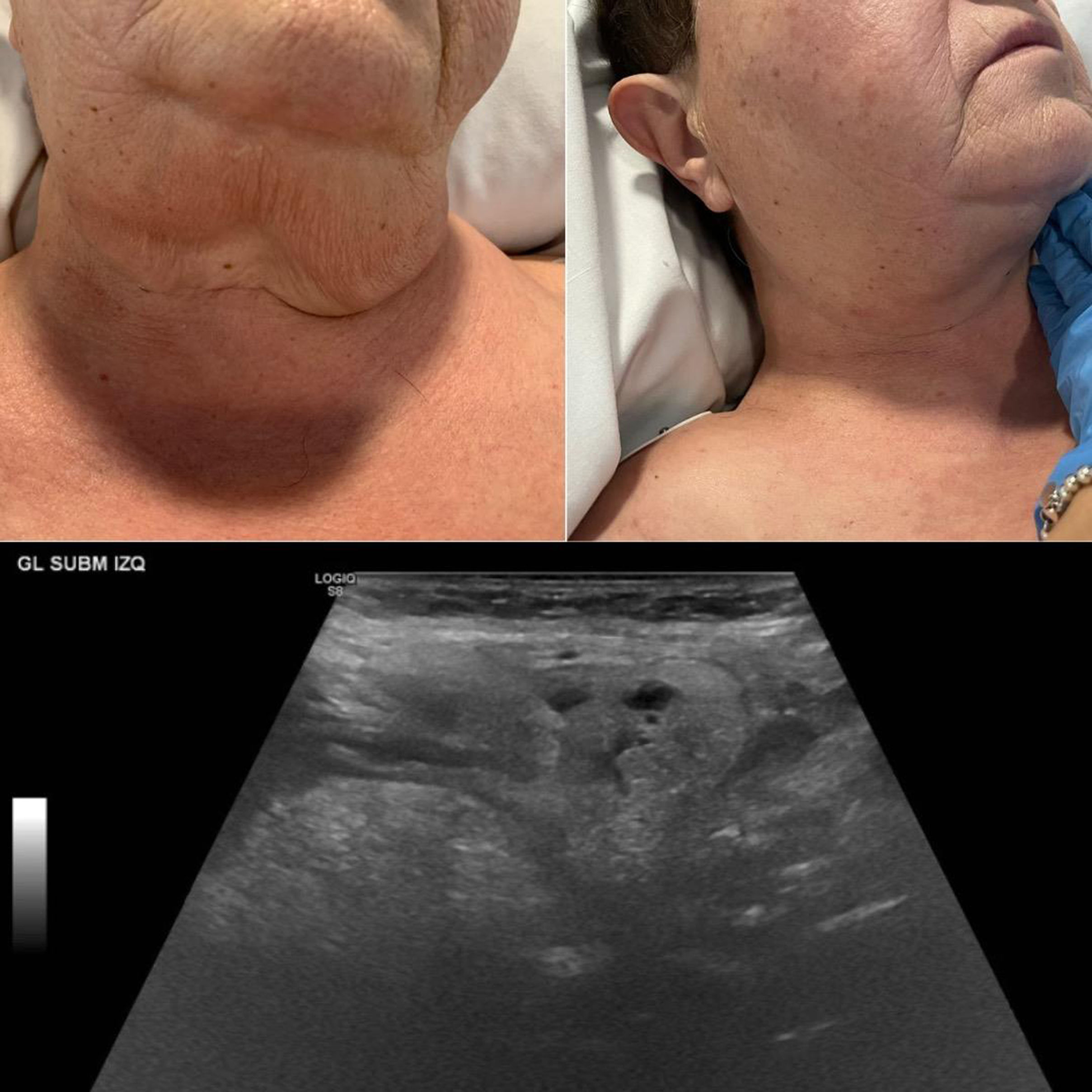
The patient received fluids, intravenous antihistamines, and corticosteroids before the angiogram, but after the procedure in which a stent was placed in her ADA, she developed a new episode of AS (Figure 1). The diagnosis of AS was confirmed by a salivary gland ultrasound. The patient recovered and was discharged 72 hours after admission with no side effects.

Bilateral, firm swelling of submaxillary glands (predominantly the left submaxillary gland) and ultrasound images showing diffuse and homogeneous enlargement of tissue with no nodular lesions, increased vascularization, and no obstruction in the excretory ducts consistent with non-infectious sialadenitis.
The authors have no conflicts of interest to declare.