



Reducing LDL-C is effective in reducing the risk of cardiovascular events, but its effect on all-cause mortality in real-world practice has yet to be estimated. We used a real-world evidence approach to analyze the impact of reducing LDL-C on all-cause mortality.
MethodsWe conducted a retrospective cohort study using electronic health records from individuals aged 40–85 years in Matosinhos, Portugal, from 1/1/2000 to 31/12/2020. Patients with ≥2 LDL-C results one year apart were categorized into four LDL-C reduction cohorts ([0–10%[, [10–30%[, [30–50%[, ≥50%). The primary outcome was all-cause death at one, three, and five years in LDL-C reduction cohorts (0–10% as reference).
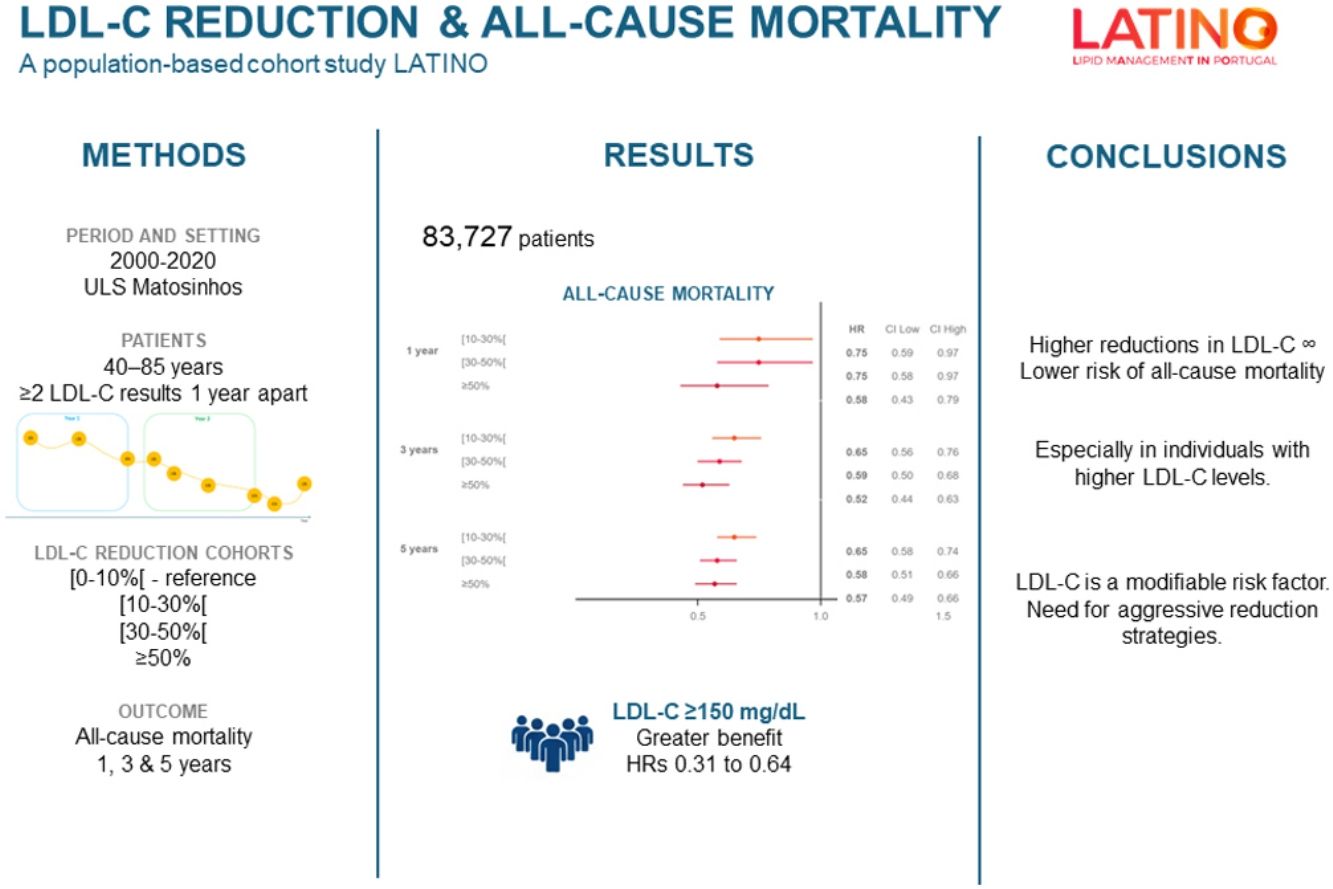
ResultsA total of 83727 individuals were included: 19177 in the [0–10%[LDL-C reduction cohort; 30774 in the [10–30%[, 22601 in the [30–50%[, and 11175 in the ≥50%. At 1 year, those with ≥50% LDL-C reduction achieved a 42% decrease in the risk of death (HR 0.58, 95%CI 0.43–0.79) and those with [10–30%[or [30–50%[LDL-C reductions a 25% decrease (HR 0.75, 95%CI 0.59–0.97; HR 0.75, 95%CI 0.58–0.97, respectively). The protective effects of LDL-C reduction became more evident over time (HRs 0.52–0.65). Patients with LDL-C levels ≥150 mg/dL benefited the most from more aggressive LDL-C reduction in the three follow-up periods (HRs 0.31–0.64).
ConclusionsHigher reductions in LDL-C are associated with lower risk of all-cause mortality, especially in individuals with higher LDL-C levels. These findings underscore the relevance of LDL-C as a modifiable risk factor and the need for aggressive LDL-C reduction strategies.
A redução do colesterol da lipoproteína de baixa densidade (C-LDL) é eficaz na diminuição do risco de eventos cardiovasculares, mas o seu efeito na mortalidade na prática clínica real ainda não foi estimado. Com uma abordagem de evidência do mundo real, pretendemos analisar o impacto da redução do C-LDL na mortalidade por todas as causas.
MétodosRealizámos um estudo de coorte retrospetivo com recurso a registos eletrónicos de saúde de indivíduos entre os 40 e os 85 anos da Unidade Local de Saúde de Matosinhos entre 01/01/2000 e 31/12/2020. Os doentes com 2 ou mais resultados de C-LDL com um ano de intervalo foram categorizados em quatro coortes de redução de C-LDL: ([0-10%[, [10-30%[, [30-50%[, ≥50%). O resultado primário foi a morte por todas as causas após 1, 3 e 5 anos nas coortes de redução de C-LDL (coorte 0-10% usada como referência).
ResultadosForam incluídos um total de 83.727 indivíduos: 19.177 na coorte de redução de C-LDL [0-10%[; 30.774 na [10-30%[; 22.601 na [30-50%[; e 11.175 na ≥50%. Após 1 ano, aqueles com redução de C-LDL ≥50% alcançaram uma diminuição de 42% no risco de morte (Hazard ratio-HR 0,58; intervalo de confiança-IC95% 0,43-0,79), e aqueles com reduções [10-30%[ou [30-50%[uma diminuição de 25% (HR 0,75; IC95% 0,59-0,97; HR 0,75; IC95% 0,58-0,97, respetivamente). Os efeitos protetores da redução do C-LDL tornaram-se mais evidentes ao longo do tempo (HRs 0,52 a 0,65). Os doentes com níveis de C-LDL ≥150mg/dL foram os que mais beneficiaram de uma redução de C-LDL mais agressiva nos 3 períodos (HRs 0,31 a 0,64).
ConclusõesReduções mais elevadas do C-LDL estão associadas a um menor risco de mortalidade por todas as causas, especialmente em indivíduos com níveis de C-LDL mais elevados. Este resultado sublinha a relevância do C-LDL como um fator de risco modificável e da necessidade de estratégias agressivas para a sua redução.
Cardiovascular disease (CVD) is the leading cause of death worldwide, accounting for more than four million deaths in Europe each year.1 In Portugal, CVD causes over 32000 fatalities annually, constituting 28% of the total mortality in 2021 (representing 126 deaths per 100000 individuals).2,3 CVD represents a significant burden of disability-adjusted life years (DALYs), with ischemic heart disease accounting for 1825 DALYs per 100000 people, as well as posing a significant economic burden, with an estimated cost of 1.9 billion euros in 2016.4,5 Atherosclerotic cardiovascular disease (ASCVD) is a major component of the significant burden presented by CVD.6 Indeed, very high-risk patients with prior ASCVD represent the highest costs per patient across healthcare settings, ranging from 115€ per emergency visit and 2673€ per hospitalization.7
Low-density lipoprotein cholesterol (LDL-C) has been proven as a causal factor, being a central agent in the development of atherosclerosis.1,6,8 The linear relationship between elevated LDL-C and ASCVD has been well-documented in numerous studies, with studies showing a reduction in cardiovascular (CV) death up to 10% per 1 mmol/L decrease in LDL-C.1,9–17 This association is particularly pronounced in familial hypercholesterolemia, where lifelong exposure to untreated extremely high LDL-C levels leads to accelerated atherosclerosis and premature CVD. However, with timely treatment many individuals live a near-normal lifespan, underscoring the importance of early reduction of LDL-C levels.18,19 Clinical trials have demonstrated that LDL-C reduction reduces CV events and mortality rates.20–22 The Portuguese “Lipid mAnagemenT iN pOrtugal” (LATINO) Study revealed that CVD risk stratification is crucial for predicting long-term CVD death and ASCVD hospitalizations,23 and that, while 44% of low-risk patients achieved LDL-C targets, only 3% of very high-risk patients met these goals.24
Lipid management, specifically focusing on controlling LDL-C levels, stands as a pivotal modifiable risk factor in the context of CVD. However, its impact in overall mortality in real-world practice needs to be established.25,26 Understanding LDL-C's role in overall mortality in a real-world setting, is crucial for developing effective public health strategies and interventions.
ObjectivesThis study aimed to comprehensively assess the influence of LDL-C reduction in mitigating all-cause mortality among individuals with dyslipidemia in a real-world evidence approach in a cohort of patients from the LATINO Study.
MethodsStudy designThis retrospective observational cohort study used electronic health records (EHRs) of individuals receiving care at the Unidade Local de Saúde de Matosinhos (ULSM) between 2000 and 2020. ULSM is an integrated healthcare institution in Northern Portugal that includes 14 primary care centers working in close proximity to one hospital and serve the resident population in the city of Matosinhos, Portugal, which accounts for approximately 90% of the resident population of Matosinhos, according to the 2021 Portuguese Census.27 This research is part of additional analyses conducted on the LATINO cohort.23,24
This study was approved by the Ethical Committee and Data Protection Officer of the ULSM (approval code numbers 34/CE/JAS of 23-04-2020 and 64/CE/JAS of 10-07-2020).
Study populationWe reviewed EHRs for eligible participants between 1 January 2000 and 31 December 2020. To be eligible for the study, patients had to meet all the following criteria at the time of cohort entry (index date): (i) age 40–85 years; (ii) at least one appointment with a primary care physician within ULSM in the three years preceding the index date; (iii) at least one record within ULSM in the last year before the index date; (iv) record of at least of two LDL-C screening results one year apart. The index date was defined as the date of cohort entry. The definition for criterion (ii) was designed to align with the official government indicator used to determine whether a patient is routinely followed in the healthcare system.28 These inclusion criteria maximize the overlap of the study population with the resident population. No exclusion criteria were applied.
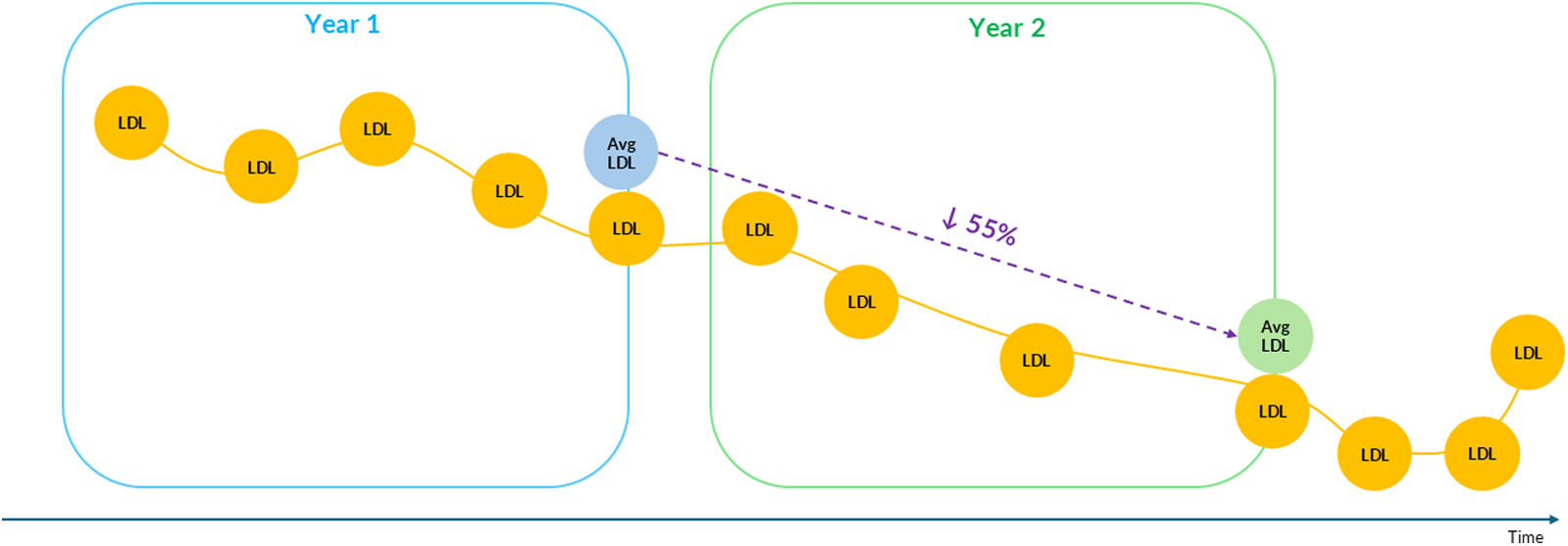
Patient cohortsThe first step in defining the different patient cohorts was to derive the 365-day moving average of LDL-C. Then we used the one-year average LDL-C value to compute the maximum LDL-C reduction from the average value of a subsequent year. Afterwards, patients entered cohorts based on the percentage reduction in LDL-C of [0-10%[, [10-30%[, [30-50%[, or ≥50%. Figure 1 shows a graphical description of our methodology. If patients entered multiple cohorts across time, all entries except the latest were discarded. From the index date, patients were followed for one, three and five years.
Graphical description depicting our methodology for including a patient in a defined LDL-C reduction cohort. The yellow circles represent each LDL-C measurement of a given patient throughout time, the blue circle represents the average value of LDL-C evaluated during a 1-year window (Year 1), while the green circle represents the average LDL-C at the end of a subsequent 1-year window (Year 2). The percentage decrease is represented by the purple arrow and is determined by subtracting the average values. Avg: average; LDL: low-density lipoprotein cholesterol.
Sex, age, maximum absolute LDL-C, CV risk (Supplementary Table S1),1 relevant CV risk variables (obesity, smoking status, type 2 diabetes), risk-enhancing factors (heart failure, atrial fibrillation, chronic obstructive pulmonary disease), lipid lowering therapy as well as CV and diabetes medications (renin-angiotensin-aldosterone system-RAAS, calcium channel blockers, antiplatelets, anticoagulants, glucagon-like peptide-1 receptor agonists-GLP-1ra, sodium-glucose transport protein 2 inhibitors-SGLT-2i) were retrieved. For all relevant variables, all patient conditions and criteria for risk assessment were reconstructed using the most granular available records of clinical measurements and laboratory results at ULSM. All relevant conditions were identified using the corresponding International Classification of Primary Care – 2nd Edition (ICPC-2), International Classification of Disease, 9th Revision (ICD-9) and International Classification of Disease, 10th Revision (ICD-10) codes. Moreover, LDL-C values and current CV and diabetes medications were registered according to the Anatomical Therapeutic Chemical Classification System. Patient death date was retrieved from the EHR. Supplementary Tables S2 and S3 show the definitions for all study variables.
Data management and statistical analysisAll data processing and analyses were performed using custom analytic programs developed specifically for this study. These programs were executed within the secure ULSM data center, with no external data extraction or direct researcher access to the raw data. The study packages – designed to run on ULSM's local infrastructure (Apache Spark Framework v3.2.1) – implemented the full data pipeline, including harmonization of source data (aligned with OMOP CDM v5.4), variable derivation, statistical analysis, and generation of aggregated results reports. Patient demographic and clinical characteristics were described for each cohort of percentual LDL-C reduction. Continuous variables were reported as median and interquartile range (IQR). Categorical variables were presented as absolute and relative frequencies. Cox regression models to derive hazard ratios for all-cause death at one, three, and five years of follow-up were developed. The LDL-C reduction of [0-10%[cohort was used as reference. Cox regression models were adjusted for sex, age, relevant CV risk variables (obesity, smoking status, type 2 diabetes), risk-enhancing factors (heart failure, atrial fibrillation, chronic obstructive pulmonary disease) as well as CV and diabetes medications (renin–angiotensin–aldosterone system-RAAS, calcium channel blockers, antiplatelets, anticoagulants, glucagon-like peptide-1 receptor agonists-GLP-1ra, sodium-glucose transport protein 2 inhibitors-SGLT-2i). As a sub-analysis, we created Cox regression models to derive hazard ratios (HRs) for all-cause death for the same cohorts, but stratified by maximum absolute LDL-C measurements at baseline (<100 mg/dL; 100–129 mg/dL; 130–149 mg/dL; ≥150 mg/dL). Apache Spark Framework version 3.2.1 and R version 4.3.2 with the Survival package29 were used for the statistical analysis. Vega-Lite was used to generate forest plots.30
ResultsParticipantsThe study involved a total of 83727 participants distributed among four cohorts based on the percentage of LDL-C reduction. The cohort with a [10–30%[LDL-C reduction included the highest number of patients (n=30774), while the cohort with ≥50% LDL-C reduction included the lowest (n=11175).
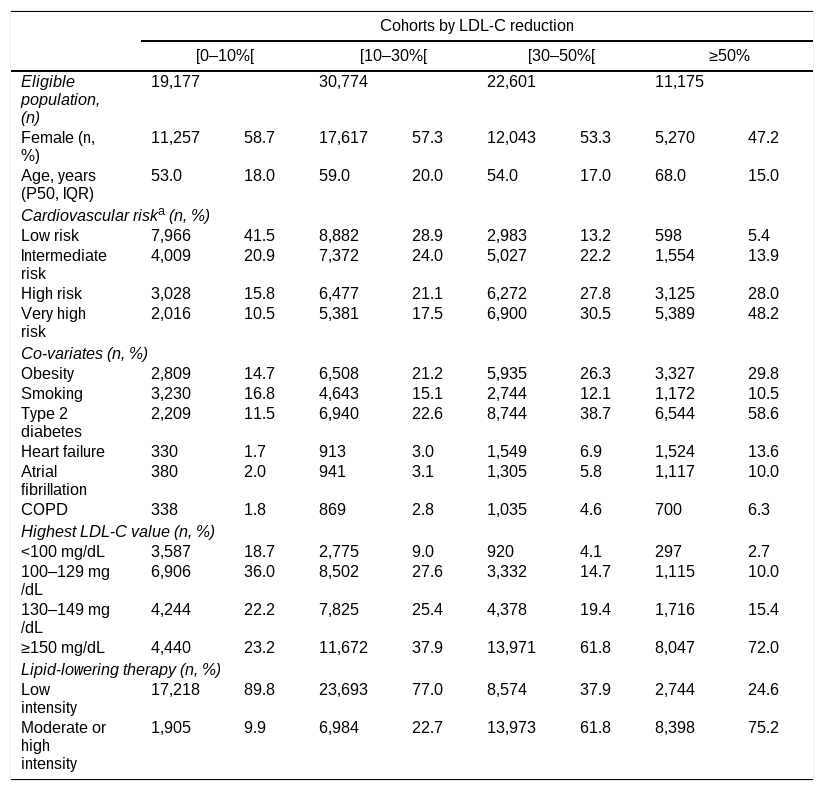
The baseline demographic and clinical characteristics of the patients in these cohorts are presented in Table 1. Females predominated in all cohorts, comprising between 53.3% and 58.7% of participants, with the exception of the cohort experiencing the highest LDL-C reduction, where females accounted for 47.2%. The median age was relatively consistent among the [0–10%[, [10–30%[, and [30–50%[LDL-C reduction cohorts, ranging from 53 to 59 years. In contrast, the cohort with ≥50% LDL-C reduction had a higher median age (68 years).
Baseline characterization for the cohorts population by LDL-C reduction group.
| Cohorts by LDL-C reduction | ||||||||
|---|---|---|---|---|---|---|---|---|
| [0–10%[ | [10–30%[ | [30–50%[ | ≥50% | |||||
| Eligible population, (n) | 19,177 | 30,774 | 22,601 | 11,175 | ||||
| Female (n, %) | 11,257 | 58.7 | 17,617 | 57.3 | 12,043 | 53.3 | 5,270 | 47.2 |
| Age, years (P50, IQR) | 53.0 | 18.0 | 59.0 | 20.0 | 54.0 | 17.0 | 68.0 | 15.0 |
| Cardiovascular riska (n, %) | ||||||||
| Low risk | 7,966 | 41.5 | 8,882 | 28.9 | 2,983 | 13.2 | 598 | 5.4 |
| Intermediate risk | 4,009 | 20.9 | 7,372 | 24.0 | 5,027 | 22.2 | 1,554 | 13.9 |
| High risk | 3,028 | 15.8 | 6,477 | 21.1 | 6,272 | 27.8 | 3,125 | 28.0 |
| Very high risk | 2,016 | 10.5 | 5,381 | 17.5 | 6,900 | 30.5 | 5,389 | 48.2 |
| Co-variates (n, %) | ||||||||
| Obesity | 2,809 | 14.7 | 6,508 | 21.2 | 5,935 | 26.3 | 3,327 | 29.8 |
| Smoking | 3,230 | 16.8 | 4,643 | 15.1 | 2,744 | 12.1 | 1,172 | 10.5 |
| Type 2 diabetes | 2,209 | 11.5 | 6,940 | 22.6 | 8,744 | 38.7 | 6,544 | 58.6 |
| Heart failure | 330 | 1.7 | 913 | 3.0 | 1,549 | 6.9 | 1,524 | 13.6 |
| Atrial fibrillation | 380 | 2.0 | 941 | 3.1 | 1,305 | 5.8 | 1,117 | 10.0 |
| COPD | 338 | 1.8 | 869 | 2.8 | 1,035 | 4.6 | 700 | 6.3 |
| Highest LDL-C value (n, %) | ||||||||
| <100 mg/dL | 3,587 | 18.7 | 2,775 | 9.0 | 920 | 4.1 | 297 | 2.7 |
| 100–129 mg/dL | 6,906 | 36.0 | 8,502 | 27.6 | 3,332 | 14.7 | 1,115 | 10.0 |
| 130–149 mg/dL | 4,244 | 22.2 | 7,825 | 25.4 | 4,378 | 19.4 | 1,716 | 15.4 |
| ≥150 mg/dL | 4,440 | 23.2 | 11,672 | 37.9 | 13,971 | 61.8 | 8,047 | 72.0 |
| Lipid-lowering therapy (n, %) | ||||||||
| Low intensity | 17,218 | 89.8 | 23,693 | 77.0 | 8,574 | 37.9 | 2,744 | 24.6 |
| Moderate or high intensity | 1,905 | 9.9 | 6,984 | 22.7 | 13,973 | 61.8 | 8,398 | 75.2 |
COPD: chronic obstructive pulmonary disease; ESC: European Society of Cardiology; IQR: interquartile range; LDL-C: low-density lipoprotein cholesterol; LLT: lipid-lowering therapy; P50: median.
In relation to CV risk, the cohorts with the lowest LDL-C reduction primarily consisted of patients classified as low or intermediate risk and the cohorts with the highest LDL-C reduction included patients categorized as high or very high risk. This trend was also evident in the presence of comorbidities, with fewer comorbidities observed in the cohorts with the lowest LDL-C reduction. For example, the proportion of participants with type 2 diabetes increased significantly from the lowest to the highest LDL-C reduction cohorts, rising from 11.5% to 58.6%. Smoking was more prevalent in the cohort with the lowest LDL-C reduction, affecting 16.8% of participants. The use of moderate or high-intensity lipid-lowering therapy increased with greater LDL-C reduction, ranging from 9.9% in the [0–10%[LDL-C reduction cohort to 75.2% in the cohort ≥50% LDL-C reduction.
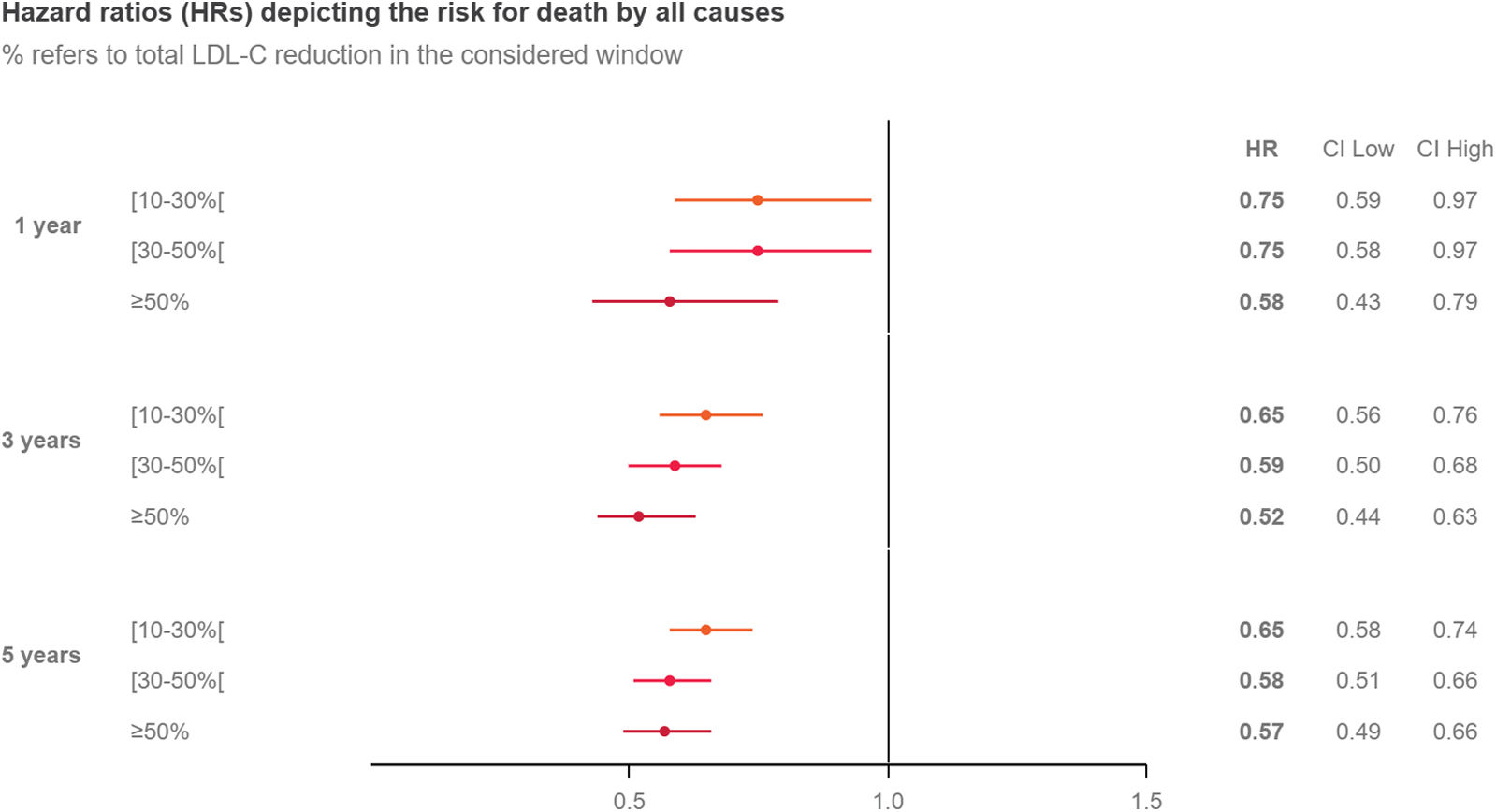
All-cause mortalityAcross LDL-C cohortsFigure 2 illustrates that at all follow-up periods, cohorts with greater reductions in LDL-C had a significant decrease in the risk of death (Supplementary Tables S4 and S5). At one year, compared to the cohort of those with a 0–10% LDL-C reduction, those with >50% reduction achieved a 42% decrease in the risk of death (HR 0.58, 95%CI 0.43–0.79), whereas those with 10–30% or 30–50% reductions experienced a 25% decrease (HR 0.75, 95%CI 0.59–0.97 and HR 0.75, 95%CI 0.58–0.97, respectively). This trend persisted over three and five year follow-ups, with the protective effects of LDL-C reduction becoming more pronounced, with lower HR (HRs ranging from 0.52 to 0.65). The reduction in the risk of death over these periods ranged from 35% in the cohort with a 10–30% LDL-C reduction to 43–48% in the cohort with >50% reduction.
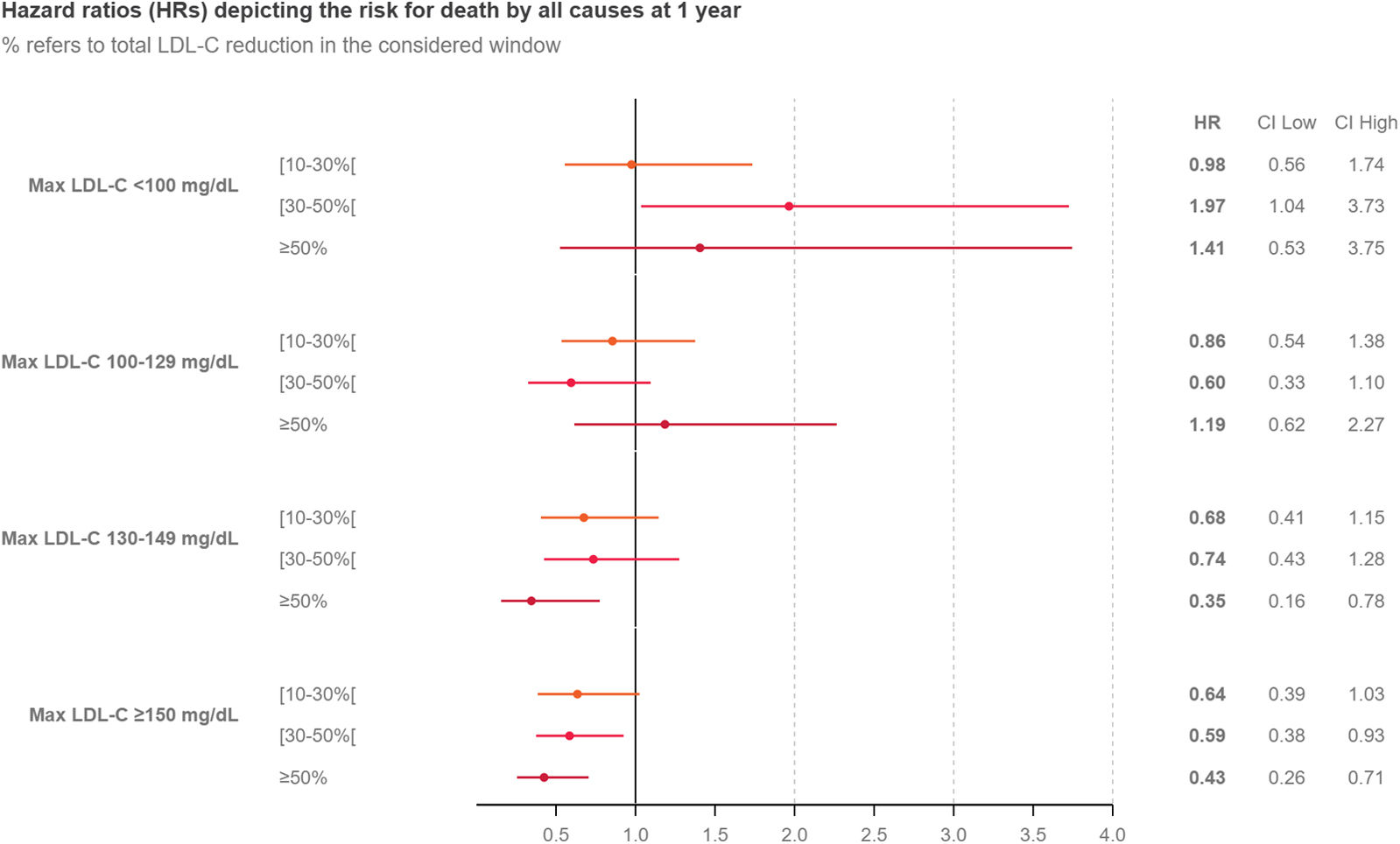
Across LDL-C cohorts stratified by maximum LDL-C levelsFor patients with maximum LDL-C levels within 130–149 mg/dL, those in the ≥50% LDL-C reduction cohort had a 65% decrease in the risk of death at one year compared to the cohort of [0–10%[LDL-C reductions (HR 0.35, 95%CI 0.16–0.78; Figure 3). For patients with maximum LDL-C levels ≥150 mg/dL, the two cohorts with highest LDL-C reduction ([30–50%[and ≥50%) also had a decrease in the risk of death (41–57%, Figure 3).
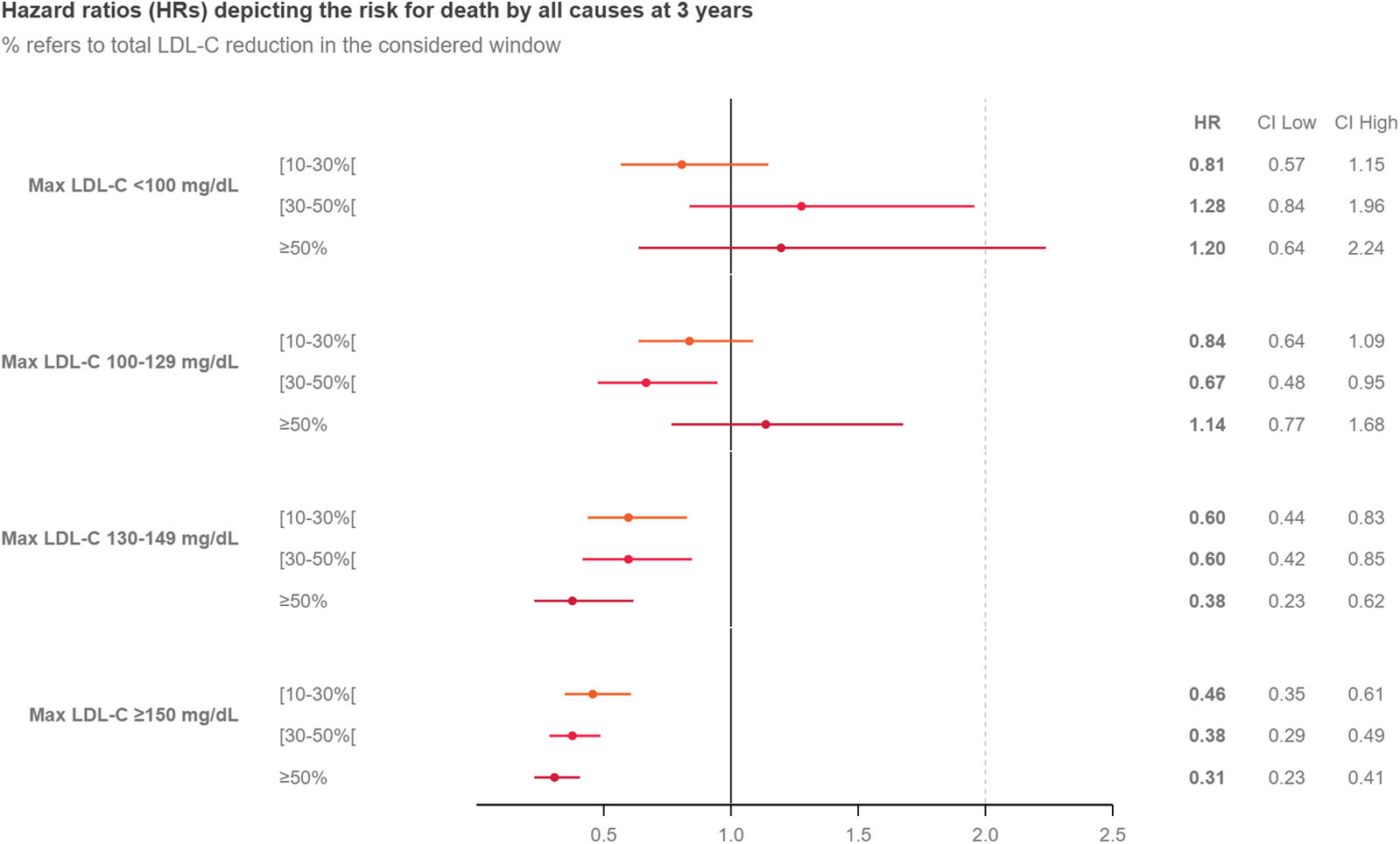
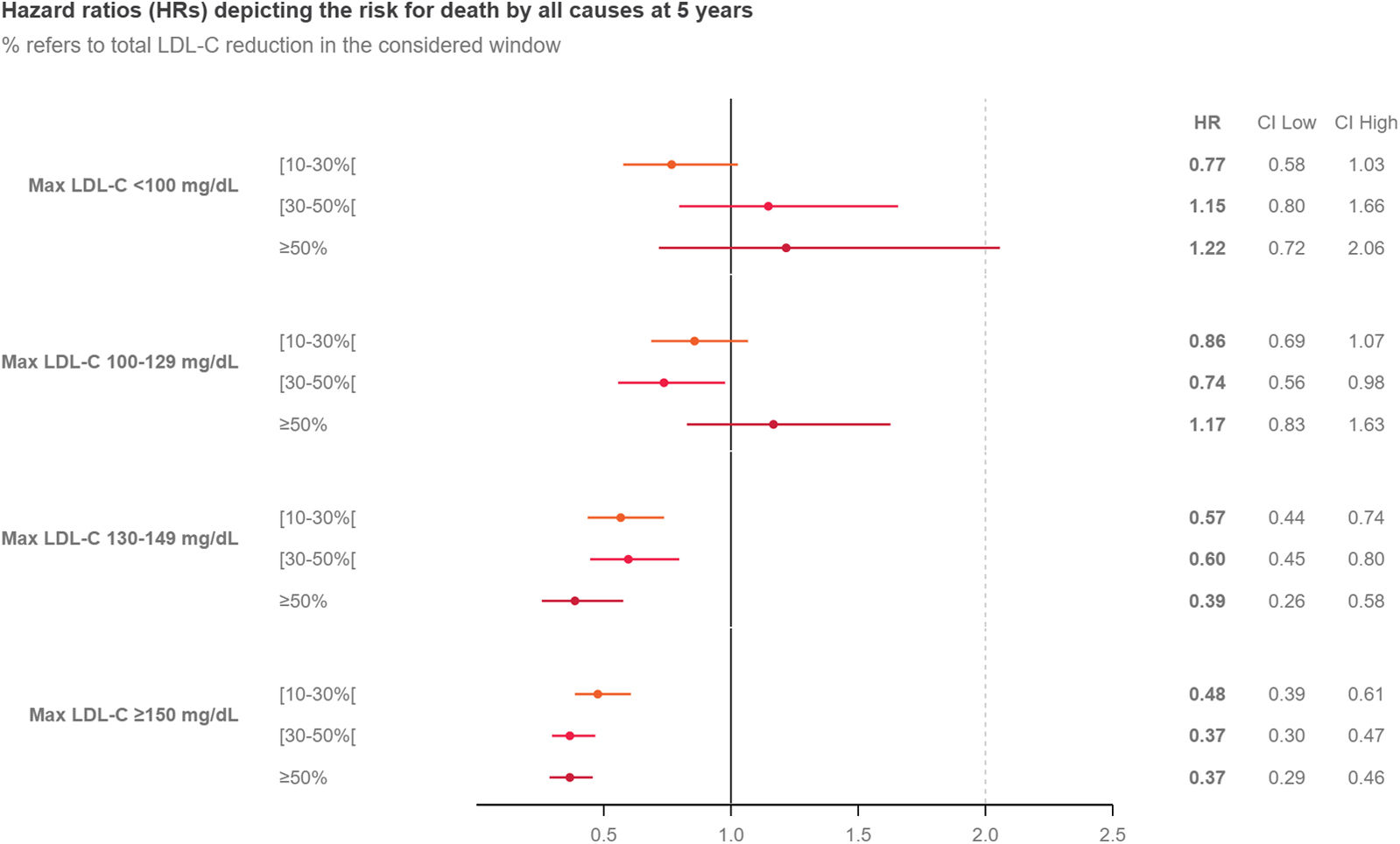
At three and five years, the survival benefit was significant in all LDL-C cohorts in the two groups with higher maximum LDL-C levels (Figures 4 and 5).
For patients with maximum LDL-C <100 mg/dL, those with a 30–50% LDL-C reduction had a statistically significant increase in mortality (HR 1.97, 95%CI 1.04–3.73). The degree of LDL-C reduction did not significantly enhance survival at one year for patients with maximum LDL-C levels <100 mg/dL in the other LDL-C cohorts and for those within the 100–129 mg/dL range (Figure 3). The same pattern was observed at three and five years of follow up (Figures 4 and 5). However, over these periods, patients in the 100–129 mg/dL range who achieved a 30–50% LDL-C reduction had a 26–33% decrease in the risk of death compared to those with a 0-10% reduction (Figures 4 and 5). More information regarding these sub-analyses can be found in Supplementary Tables S6–S8.
DiscussionOur retrospective observational cohort study utilized a robust longitudinal approach, examining a large cohort of individuals from an unscreened adult population from Matosinhos City in Northern Portugal to assess the impact of varying degrees of LDL-C reduction on all-cause mortality at 1, 3 and 5 years. Our results suggest that higher levels of LDL-C reduction are associated with a reduced risk of all-cause death, even when adjusted for important prognostic variables. Notably, this relationship becomes stronger over time.
While our data support a relationship between LDL-C reduction and all-cause death reduction, it is important to note that currently no consensus regarding optimal LDL-C values exists. The beneficial effects of reducing LDL-C regarding CVD are widely accepted.1 Studies featuring genetic polymorphisms or healthy lifestyles have shown that prolonged exposure to lower LDL-C is correlated with a higher reduction in the risk of CV events.12,31 In addition, our results are in line with the meta-analysis from Cholesterol Treatment Trialists’ Collaboration, which showed that there was no evidence of any threshold within the cholesterol reduction range studied.32 Further reductions in LDL cholesterol safely produced further reductions in the incidence of heart attack, of revascularization, and of ischemic stroke, with each 1.0 mmol/L reduction reducing the annual rate of these major vascular events by just over a fifth.32 Also, landmark trials evaluating intensive LDL-C lowering, including FOURIER (evolocumab+statin), ODYSSEY OUTCOMES (alirocumab+statin), and IMPROVE-IT (ezetimibe+simvastatin) showed that reduced risk of cardiovascular events is linked with the reduction in LDL-C levels below current targets.21,33,34
In populations at higher risk, particularly those with established dyslipidemia, findings align with previous research conducted across diverse groups. Studies involving participants with elevated baseline LDL-C levels demonstrated that more aggressive LDL-C reduction strategies were associated with significantly lower risks of CV mortality and overall mortality compared to less intensive approaches.25,26 Hsu et al. analyzed over 18 randomized controlled trials, noting a differential in all-cause mortality risk reduction favoring more intensive lipid-lowering therapy over standard treatment, quantified as HR 0.90 (95% CI, 0.83–0.97).26 Notably, the extent of this risk reduction varied depending on the initial LDL-C levels of the participants within each study. These findings highlight that at the start, individuals with higher LDL-C levels showed more pronounced benefits from greater LDL-C reductions, further supporting the notion that substantial LDL-C lowering is particularly advantageous for individuals at elevated risk. Nevertheless, our sub-analysis also demonstrated that among patients with maximum LDL-C <100 mg/dL, those with a 30–50% LDL-C reduction had a borderline statistically significant increase in mortality at one year. This finding suggests a potential J-curve relationship between LDL-C reduction and mortality risk, aligning with several previous observational studies that have reported adverse outcomes associated with very low LDL-C levels.35,36 Yet, this relationship was not seen at three and five years of follow-up. This temporal pattern may imply that the observed risk may reflect acute vulnerability rather than sustained harm from low LDL-C and should be investigated in future. In a similar fashion, Domanski and colleagues used CARDIA (Coronary Artery Risk Development in Young Adults) study data and analyzed cohorts with a median 16-year follow-up of individuals aged over 40 years and concluded that the risk of experiencing a future CV event at a specific age is intricately linked to the cumulative area under the curve depicting LDL-C levels over time.37 Notably, the timing of this accumulation plays a pivotal role. Two individuals aged 40, for example, sharing comparable LDL-C levels and total area under the LDL-C versus age curve, could exhibit distinct risks for future CV events if the pattern of area accumulation varies between them.37 A Taiwanese analysis was also modeled for baseline exposure, and the same tendencies were found.26 This evidence is in line with the sustained risk reduction benefits regarding long-term LDL-C control. Our study suggests a benefit of steady LDL-C low levels and overall HR of death by all causes. The data underscore the significance of personalized and aggressive LDL-C lowering strategies, particularly for those with initially higher LDL-C levels, in achieving sustained mortality benefits.
This study was conducted in an integrated healthcare institution serving a predominantly urban population, and thus generalization of results to dissimilar populations is limited. However, the high degree of patient inclusion and the high rate of patient reconstruction of a stable regional population provide a detailed and unconstrained real-world perspective of patient populations under primary and secondary care followed in similar settings. While the use of OMOP CDM ensured data standardization, the study shares limitations common to real-world evidence, including potential data completeness issues. Furthermore, the observational nature of this study limits our ability to establish causation. Our findings are susceptible to residual confounding by indication, where patients achieving ≥50% LDL-C reductions had more baseline comorbidities and higher utilization of aggressive therapies, reflecting treatment allocation to higher-risk individuals. If present, unmeasured frailty would likely dilute the observed survival benefit, suggesting the true protective effect may actually be stronger than our estimates indicate. In addition, other lipid parameters (triglycerides, small dense LDL, oxidized LDL, or Lipoprotein(a)) and other comorbidities, such as cancer or chronic infections, associated with increased mortality could have been retrieved from EHRs and included in the survival models. Nonetheless, in light of the current knowledge, we believe our models already account for relevant variables to translate real-world clinical practice. Additionally, categorizing patients into specific reduction cohorts required calculating moving averages over consecutive 1-year windows, meaning patients inherently had to survive this calculation period to be classified. This survival requirement may artificially inflate early survival estimates for the exposed cohorts. However, our three and five year data demonstrate a sustained survival benefit, reducing the relative impact of this initial bias over longer follow-up periods. While the analysis stratified by maximum absolute LDL-C measurements does not use established cut-off values due to a lack of international consensus, we have utilized recognized thresholds, which we consider an additional strength of this work. Future multicentric studies with larger samples could build upon our findings by analyzing additional clinical parameters, exploring other maximum absolute LDL-C cut-offs, incorporating advanced lipid profiling, and utilizing sensitivity analyses to examine how variable definitions affect outcomes. Despite these limitations, this study offers valuable insights into the relationship between LDL-C reduction and all-cause mortality, laying the groundwork for further research.
ConclusionsOur study involving over 83000 patients across four LDL-C reduction cohorts demonstrated a clear inverse relationship between the extent of LDL-C reduction and all-cause death and contributed to the growing body of evidence supporting the significance of LDL-C reduction as a modifiable mortality risk factor. Patients with higher LDL-C reduction levels exhibited lower all-cause death rates, with the highest risk reduction observed in the >50% LDL-C reduction group. Furthermore, a sub-analysis based on maximum LDL-C levels underscored the critical role of aggressive LDL-C reduction, especially for patients with initial LDL-C levels exceeding 150 mg/dL. These findings emphasize the importance of tailoring treatment strategies for individuals with varying degrees of LDL-C reduction and highlight the intricate interplay of demographic, health-related factors, LDL-C levels, and lipid-lowering therapy utilization in clinical practice.
Authors’ contributionsConceptualization, C.G., D.S.C., M.A.-S., A.S.F.; methodology, C.G., D.S.C., M.A.-S., A.S.F., N.L.-S., M.C.-P.; formal analysis, N.L.-S., M.C.-P.; writing – original draft preparation, N.L.-S.; writing – review and editing, M.A.-S., M.C.-P. and C.J.; project administration, C.G. and F.A. All authors have read and agreed to the published version of the manuscript.
Institutional review board statementThe study was conducted in accordance with the Declaration of Helsinki, and approved by the Ethical Committee and Data Protection Officer of the Unidade Local de Saúde de Matosinhos (approval code numbers 34/CE/JAS of 23-04-2020 and 64/CE/JAS of 10-07-2020).
Informed consentPatient consent was waived due to the retrospective nature of the study.
FundingThis study was funded within the scope of a collaboration protocol in clinical research between Novartis Farma, Produtos Farmacêuticos SA, and the Portuguese Society of Atherosclerosis.
Conflicts of interestA.S.F. and M.A.-S. are employees of Novartis Farma, Produtos Farmacêuticos. The remaining co-authors have no conflicts of interest to declare.
Data availabilityAll aggregate statistical results are incorporated into this article. Patient-level data used in this study is not publicly available.
The authors would like to acknowledge the editorial support, namely the constructive review of the manuscript and comments raised. The authors also would like to acknowledge Pedro Hispano Hospital for granting permissions for this study to Daniel Santos, Tiago Morais and José Castanheira from the Department of Information Technologies for conducting data processing.
The following are the supplementary data to this article: